Recycling and Sustainability for Gardeners Palmers Green
Welcome to the sustainability page for Palmers Green gardeners and local green-space stewards. This document sets out our shared ambition to create an eco-friendly waste disposal area and a thriving sustainable rubbish gardening area where plant material, pots and soil are treated as resources, not rubbish. As gardeners in Palmers Green we aim to balance beautiful greenspaces with responsible resource management, reducing carbon emissions and maximising reuse.
Our headline commitment is a clear recycling percentage target: we are aiming for a 65% recycling rate by 2028 across all community gardening activities and associated waste streams. This target covers organic composting, reusable container recovery, correct separation of mixed recyclables and the diversion of bulky garden waste from landfill. Achieving this will rely on coordinated collections, education and partnerships with local authorities and charities.
 To support the borough-wide approach to waste separation, Palmers Green gardeners follow the London borough model of separating paper and card, glass, mixed plastics, and food and garden waste where separate collections operate. Our sustainable rubbish gardening area uses labelled bays for green waste, cleaned pots and trays for reuse, and a clear policy for hazardous items (like batteries in outdoor equipment) that should never go into compost or general waste.
We work with local transfer stations and processing hubs to ensure material collected on-site enters the right recycling stream. Local transfer stations commonly used by community groups include the borough transfer facility and nearby EcoParks that accept segregated green waste and bulky recyclable items. These transfer stations provide interim sorting, baling and onward transport so the low-carbon vans that serve Palmers Green can carry larger loads with fewer round trips.
 A practical element of our programme is the sustainable rubbish gardening area layout: clear signage, stacked pallets for soil screening, separate compost bays for woody and leafy material, and covered stores for reusable pots. We encourage gardeners to engage in on-site composting for small volumes, with the remainder collected to local composting facilities. Community composting reduces transport needs and returns valuable humus to beds, lowering the need for manufactured fertilisers.
Partnerships with charities and social enterprises form the backbone of our reuse strategy. We partner with local re-use charities that redistribute usable garden tools, plant pots and furniture, and with food redistribution groups that take surplus produce. These collaborations not only extend the life of items but offer training and volunteering opportunities, creating social value alongside environmental benefit.
Operationally, we have introduced a fleet of low-carbon vans and cargo bikes that service community sites and collect sorted garden waste and recyclable materials. Low-emission vehicles reduce the carbon footprint of collections and enable more frequent, smaller pickups that fit gardener schedules. Where possible we prioritise electric vans for short urban trips and hybrid vehicles for mixed-distance runs.
To make the eco-friendly waste disposal area effective, we follow clear handling protocols: cleaned containers for recycling, designated quarantine space for potentially contaminated materials, and routine audits to keep contamination levels low. These audits track contamination rates and feed back into training sessions so Palmers Green gardeners learn best practice in the borough’s waste separation system.
 Our actions include targeted campaigns to reduce single-use plastics in potting and to promote pot-sharing schemes. We provide lists of acceptable materials for the sustainable rubbish gardening area, emphasise how to prepare items for reuse, and highlight seasonal collection schedules that align with borough services. Education is delivered via workshops and printed signage at garden entrances.
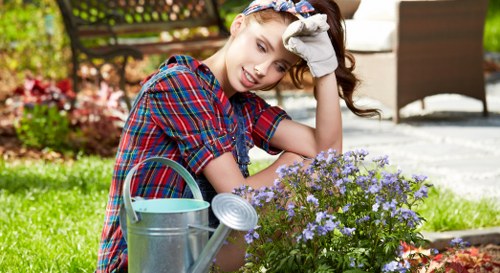
What you can expect from Palmers Green’s recycling programme
When you bring materials to the site you will find:
- Separate bays for leafy compost, woody compost and mixed green waste;
- Recycling points for clean glass, cans, and plastics as per the borough’s accepted list;
- Collection windows for bulky items and reusable pots, coordinated with local charities;
- Drop-off guidance for items that must be taken to a transfer station rather than left on-site.
Sustainable outcomes and how we measure success
We track progress against the 65% recycling target with quarterly reports on tonnages sent to composting, amounts reused via charity partners, and reductions in landfill-bound waste. Key performance indicators include diversion rate, contamination rate, and carbon savings from reduced vehicle miles and increased reuse. By monitoring these figures, Palmers Green gardeners can continually adapt and improve the eco-friendly waste disposal area.Together, Palmers Green gardeners, local charities, and borough services can create a resilient, sustainable gardening ecosystem. Our plan is pragmatic: clear zones for waste, practical reuse partnerships, and a low-carbon transport model that keeps emissions down while keeping our community green. Join us in making the sustainable rubbish gardening area a model for responsible urban gardening in London.

